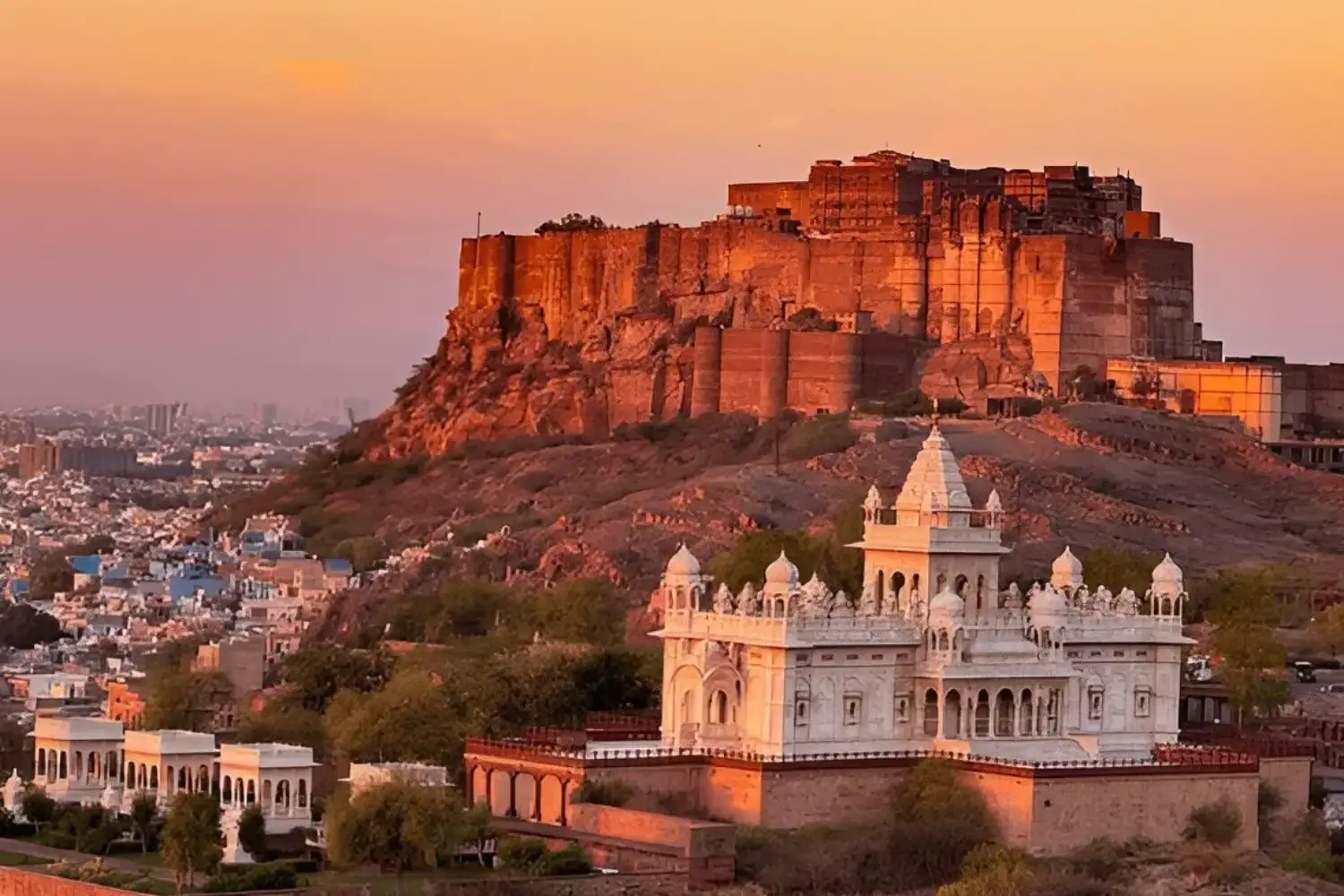
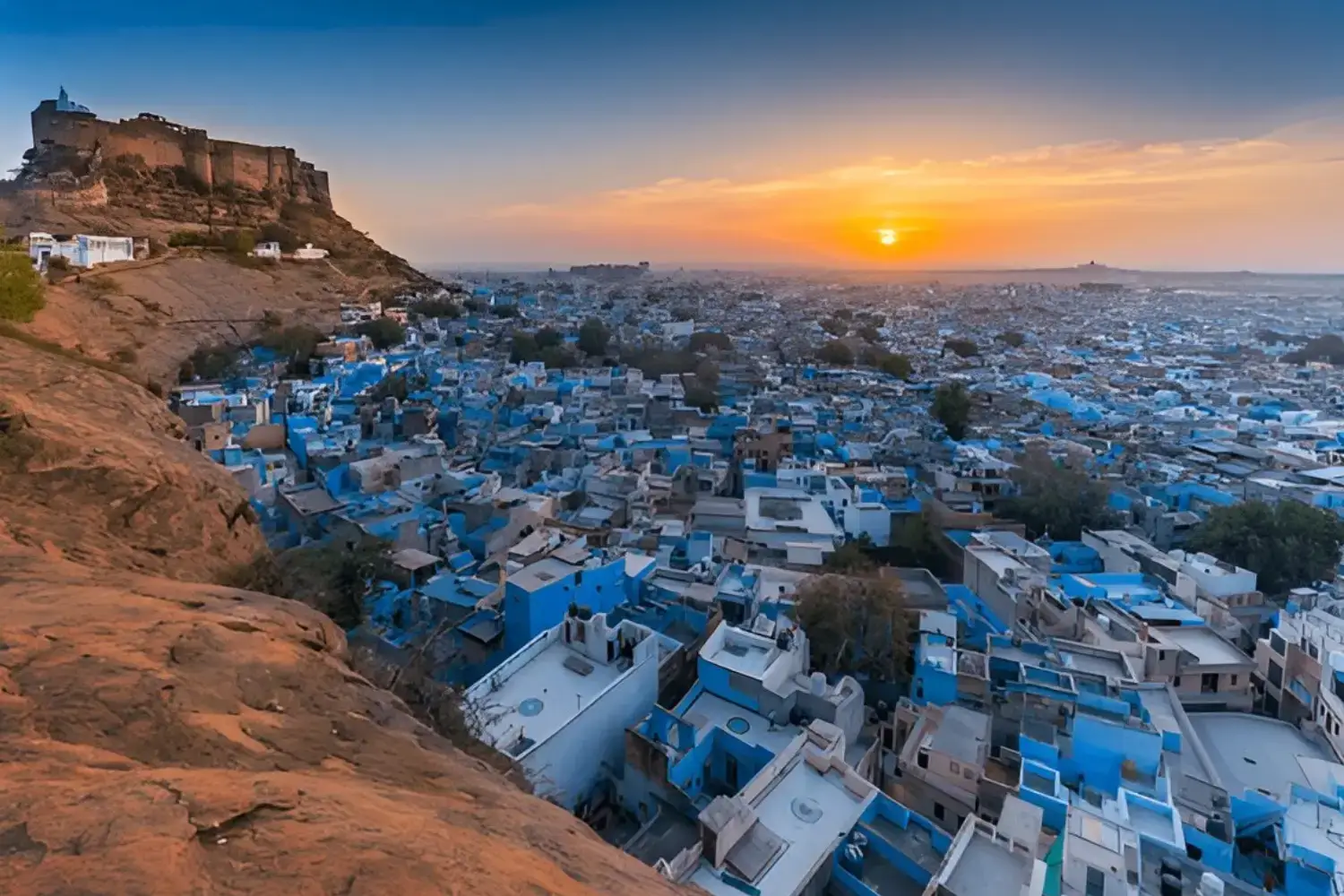
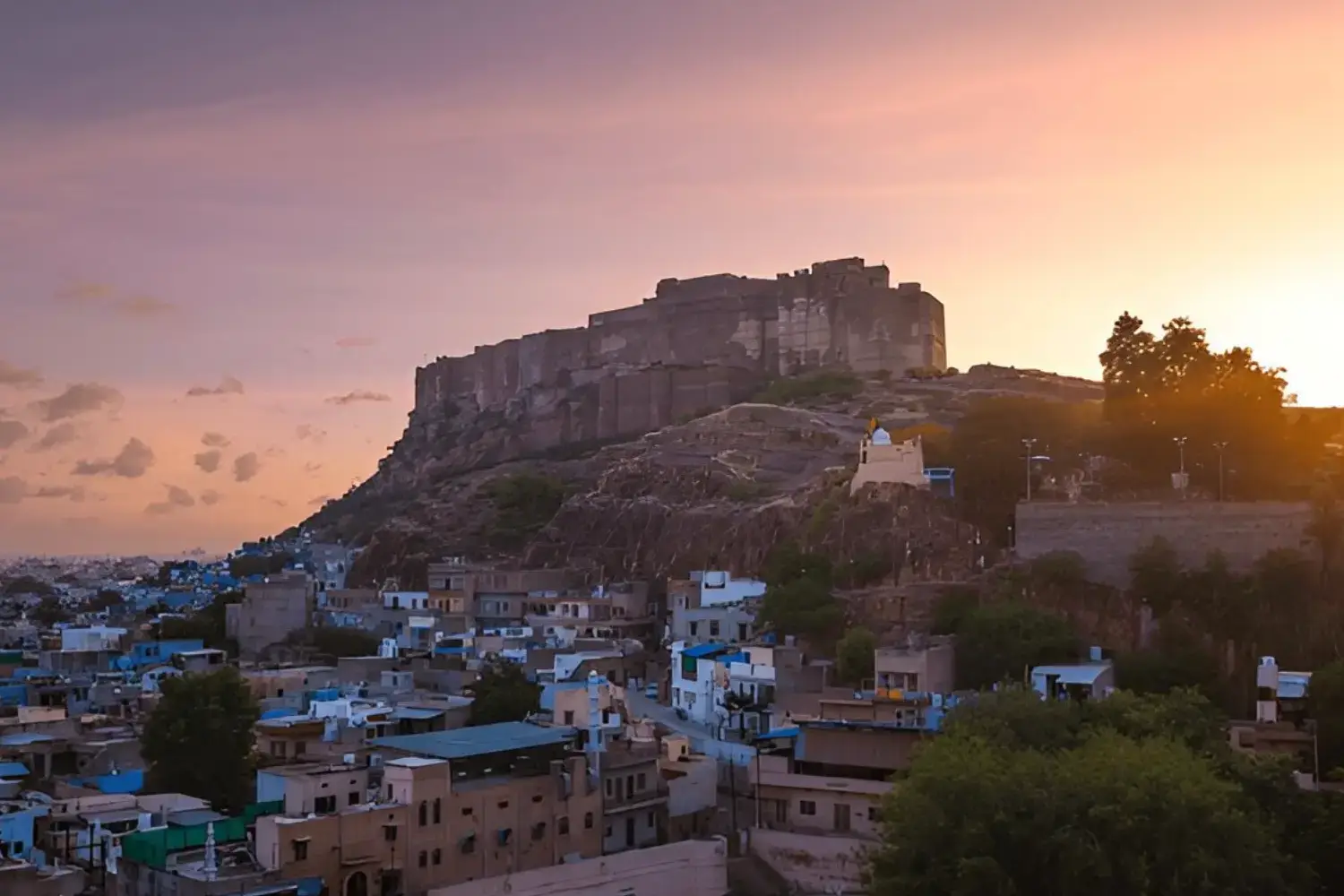
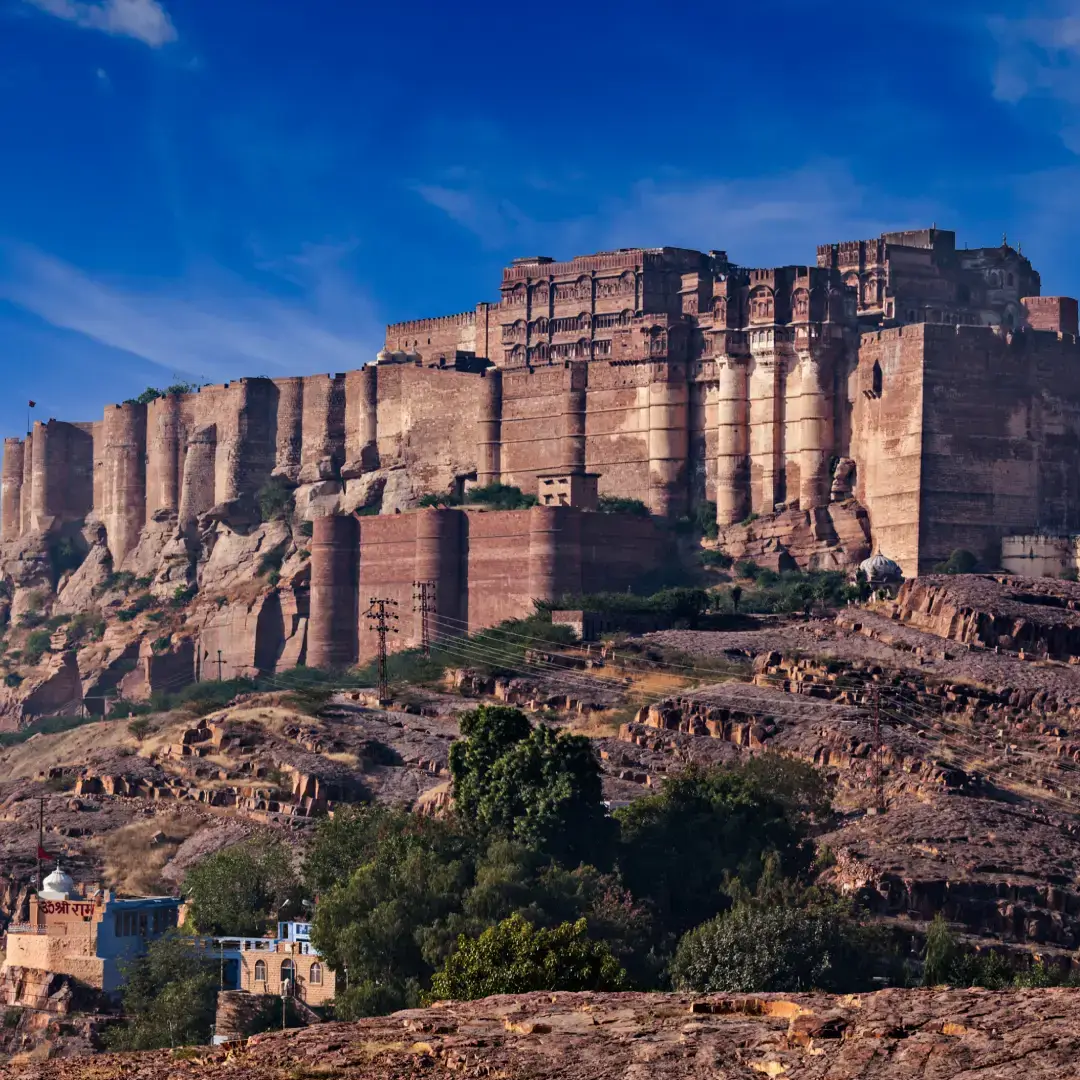
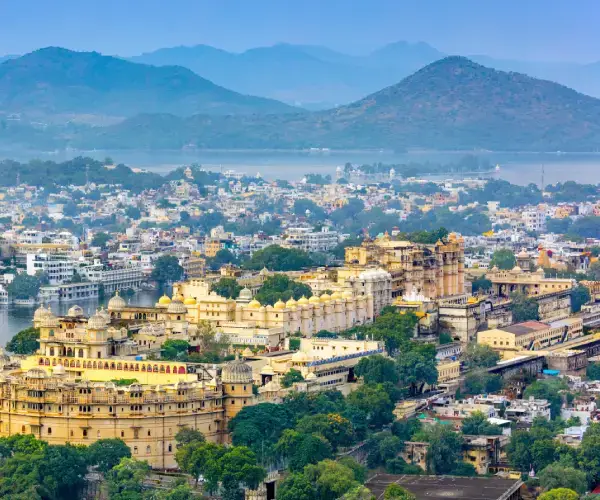
Its comprehensive museum galleries display unparalleled royal artifacts, including palanquins, elephant howdahs (one gifted by Emperor Shah Jahan), historic arms, costumes, and Marwar School paintings. Beyond its treasures, the fort offers breathtaking panoramic views of Jodhpur's "Blue City" sprawling below, especially at sunset, solidifying it as the must-visit place in Jodhpur.
History of Mehrangarh Fort
The history of Mehrangarh Fort can be traced back to 1459 when Rao Jodha, the then Rathore ruler of Mandore, decided to shift his capital to a more secure location. The strategic decision led to the foundation of Jodhpur city and the construction of this formidable fort on the rocky hill known as Bhakurcheeria, or the 'mountain of birds'.
Initially, only a modest structure was built, but over successive centuries, rulers like Jaswant Singh, Ajit Singh, and Man Singh continuously expanded and embellished the fort. Each addition reflected the changing architectural styles and defensive needs of the era, transforming it into the sprawling complex seen today. The fort has withstood countless sieges and battles, serving as the primary seat of power for the Marwar kingdom for over five centuries. Its sturdy defenses and commanding position played a crucial role in protecting the Rathore dynasty and their dominion, making it a living testament to Rajput resilience and military prowess.
Legends Behind Mehrangarh Fort
According to legend, when Rao Jodha decided to build the Mehrangarh Fort, the site was inhabited by a hermit named Cheeria Nathji, known as the “lord of birds.” Revered by the local population, Cheeria Nathji held considerable influence in the region. Despite repeated requests, he refused to vacate the hill. After several failed attempts, Rao Jodha sought the help of a powerful saint, Karni Mata of Deshnoke, a revered warrior sage of the Charan caste. Responding to the king's appeal, Karni Mata visited the site and commanded Cheeria Nathji to leave immediately. Recognizing her superior spiritual power, he departed, but not before placing a curse on Rao Jodha: "Jodha! May your citadel ever suffer a scarcity of water!" To appease the hermit, Rao Jodha built a house and temple for him within the fort complex. Karni Mata herself laid the foundation stone of Mehrangarh Fort.
Interestingly, only the forts of Jodhpur and Bikaner, both founded by Karni Mata, remain under the control of the Rathore clan to this day. Other Rajput forts across Rajasthan have been abandoned or lost over time, and locals view this as a miracle attributed to Karni Mata’s blessings.
To ensure good fortune at the new site, a man named Raja Ram Meghwal, from the Meghwal caste, voluntarily offered to be buried alive in the fort’s foundations, a practice considered auspicious at the time. In gratitude, Rao Jodha granted his family land and promised their welfare. To this day, Raja Ram Meghwal’s descendants reside in Raj Bagh, near Soor Sagar. Additionally, the villages of Mathania and Chopasni were gifted to the two Charan warriors who approached Karni Mata on Rao Jodha’s behalf.
Architectural Splendor and Key Features
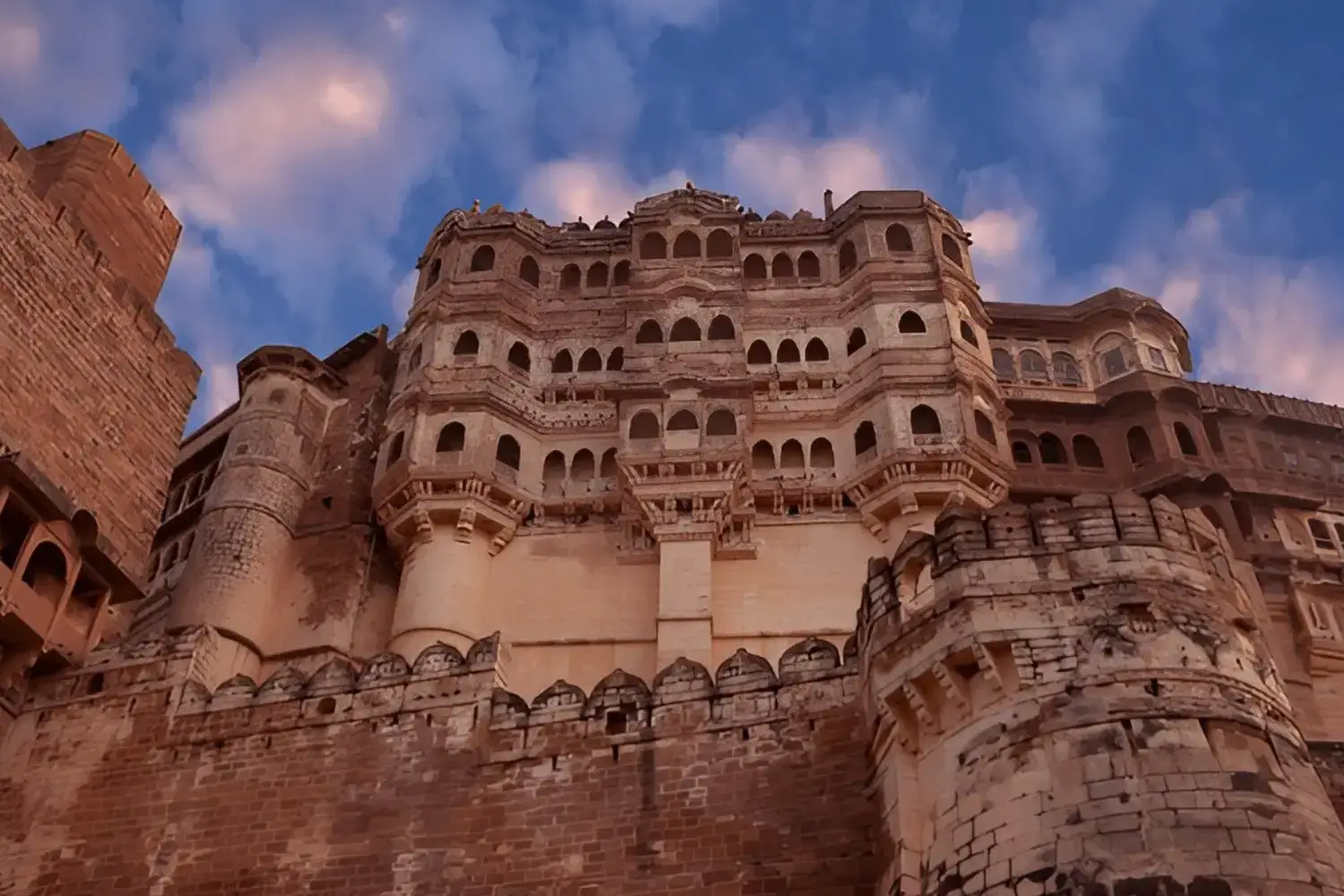
Mehrangarh Fort is a masterpiece of Rajput architecture, known for its intricate carvings, expansive courtyards, and imposing structure that blends seamlessly with the rocky landscape. The fort's design prioritizes both defense and aesthetics, showcasing a harmonious blend of strength and delicate artistry. The fort is located at the centre of the city spreading over 5 kilometres on top of a high hill. Its walls, which are up to 36 metres (118 ft) high and 21 metres (69 ft) wide. Here are some of the highlights of Mehrangarh Fort.
Key Architectural Highlights Include
- Seven Gates: The fort is accessible through seven massive gates, each bearing historical significance.
- Jai Pol (Victory Gate): Built by Maharaja Man Singh in 1806 to commemorate his victories over Jaipur and Bikaner armies.
- Fateh Pol (Victory Gate): Erected by Maharaja Ajit Singh in 1707 to mark his triumph over the Mughals.
- Dedh Kamgra Pol: Still bears the marks of cannonballs.
- Loha Pol (Iron Gate): Famous for the handprints (sati marks) of the royal queens and consorts who committed self-immolation on the funeral pyres of their husbands.
- Gopal Pol: It is the second Pol that was built after Fateh Pol.
- Amruti Pol: This gate is built between Dedh Kangra Pol and Loha Pol.
- Suraj Pol: It is the innermost gate, which provides access to the palace complex and Daulat Khana Chauk.
- Palaces (Mahals): Within the fort walls are several exquisitely crafted palaces, each a testament to royal opulence.
- Moti Mahal (Pearl Palace): Known for its five alcoves from which queens would listen to court proceedings.
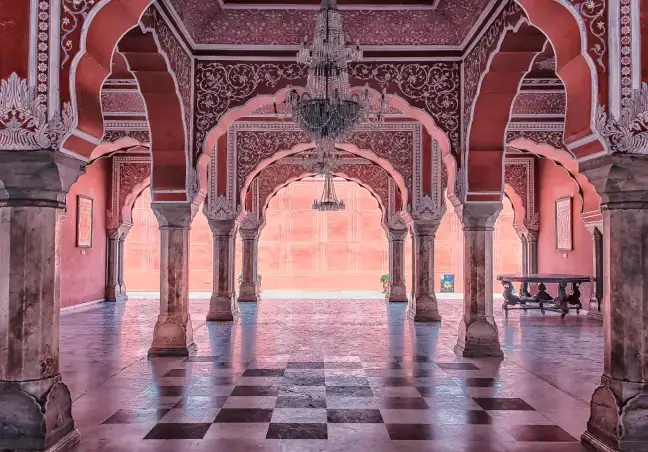
- Phool Mahal (Flower Palace): Considered the most magnificent, adorned with a ceiling of gold filigree and stained glass, reserved for the private enjoyment of the Maharajas.
- Sheesh Mahal (Mirror Palace): A dazzling chamber entirely covered in tiny, intricate mirror work.
- Jhanki Mahal (Glimpse Palace): Where royal ladies would watch the proceedings of the court through latticed windows.
Other Structures
- Takhat Vilas: The personal chamber of Maharaja Takhat Singh, adorned with frescoes on ceilings and walls.
- Zenana Deodi: The secluded women's quarters, featuring beautiful carvings and latticework, ensuring privacy while allowing views of the courtyard.
- Daulat Khana: A storehouse for royal treasures.
- Sileh Khana & Daulat Khana: Galleries displaying an impressive collection of arms and artifacts.
Mehrangarh Museum
A significant portion of Mehrangarh Fort has been converted into a comprehensive museum, offering a glimpse into the royal history and cultural heritage of Marwar. It is considered one of the best-maintained palace museums in India, showcasing a diverse collection of artifacts from centuries of Rathore rule.
Highlights of the Museum Include
- Elephant Howdahs: An impressive collection of palanquins and howdahs, including a gilded howdah gifted by Emperor Shah Jahan to Maharaja Jaswant Singh I.
- Arms Gallery: Displays a vast array of antique weaponry, including swords, daggers, shields, firearms, and even personal weapons of famous Rathore warriors, many intricately decorated.
- Palanquins Gallery: Showcases various types of palanquins, used by royalty for travel, reflecting the comfort and luxury of royal processions.
- Costume Gallery: Exhibits a vibrant collection of royal costumes, textiles, and traditional Rajasthani attire, providing insights into the fashion of the bygone era.
- Paintings Gallery: Features exquisite Marwar School miniature paintings, depicting court scenes, royal portraits, mythical tales, and hunting expeditions.
- Turbans Gallery: A unique collection displaying various types of turbans worn by different communities and social groups in Rajasthan.
- Cradles Gallery: A charming display of ornate and beautifully crafted royal cradles.
Each gallery is meticulously curated, providing detailed explanations and a rich narrative that transports visitors back to the opulent and powerful times of the Marwar rulers. While touring, visitors should be mindful of the jodhpur temperature, especially during the hotter months, as some indoor areas may retain heat.
Significance of Mehrangarh Fort
Mehrangarh Fort is far more than just a historical monument; it is a living symbol of Jodhpur's identity and the enduring legacy of the Rathore dynasty.
- Historical Bastion: It served as the impregnable capital of the Marwar kingdom for over 500 years, witnessing the rise and fall of empires, political intrigues, and cultural flourishing. Its very existence embodies the valor, resilience, and strategic acumen of the Rajput rulers.
- Architectural Marvel: The fort stands as a pinnacle of Rajput architecture, blending indigenous styles with defensive engineering and artistic finesse. Its intricate carvings, grand palaces, and innovative water harvesting systems are a testament to the advanced skills of its builders.
- Cultural Repository: The museum within its walls acts as a vital repository of Marwar's rich cultural heritage. It preserves priceless artifacts, art forms, and traditions, offering invaluable insights into the daily lives, beliefs, and artistic patronage of the royalty.
- Tourism Landmark: As one of Rajasthan's most visited attractions, Mehrangarh Fort is central to Jodhpur's tourism industry, drawing visitors from across the globe. It contributes significantly to the local economy and promotes an understanding of India's royal past.
- Living Heritage: Unlike many historical sites, Mehrangarh Fort remains a vibrant cultural hub, hosting prestigious events like the Rajasthan International Folk Festival (RIFF), which keeps its traditions alive and connects them with contemporary audiences.
Festivals & Events
- Rajasthan International Folk Festival (RIFF): Held annually in October, RIFF is a five-day music and arts festival recognized by UNESCO as a "People's Platform for Creativity and Sustainable Development." It brings together traditional folk artists from Rajasthan and around the world, performing within the atmospheric courtyards of the fort. It's a truly magical experience, showcasing vibrant music, dance, and cultural exchange against a stunning historical backdrop.
- World Sacred Spirit Festival (WSSF): Another prominent event, usually held in February, the WSSF brings together artists from across the globe to share sacred music and traditions. The fort's ancient walls resonate with spiritual melodies, creating an ethereal ambiance that draws seekers of peace and cultural immersion.
- Other Cultural Programs: Throughout the year, the Mehrangarh Museum Trust organizes various smaller concerts, art exhibitions, and cultural programs within the fort premises, ensuring a continuous engagement with Marwari heritage.
Other Interesting Facts About Mehrangarh Fort
- Mehrangarh Fort is one of the largest and most impressive fort complexes in Rajasthan.
- The fort's construction involved carving out parts of the solid rock of the hill itself, making it seem almost as if it grew organically from the mountain.
- Legend has it that the fort's original foundation was laid on the spot where a hermit named Cheeria Nathji lived, and he cursed Rao Jodha, leading to historical water scarcity.
- The fort's museum houses a golden howdah gifted by Mughal Emperor Shah Jahan, symbolizing a significant historical alliance.
- The fort's imposing walls and intricate details have served as inspiration for various films and documentaries, including "The Dark Knight Rises."
- A portion of the fort remains under the control of the present Jodhpur royal family, who are the custodians of the Mehrangarh Museum Trust.
Nearby Attractions
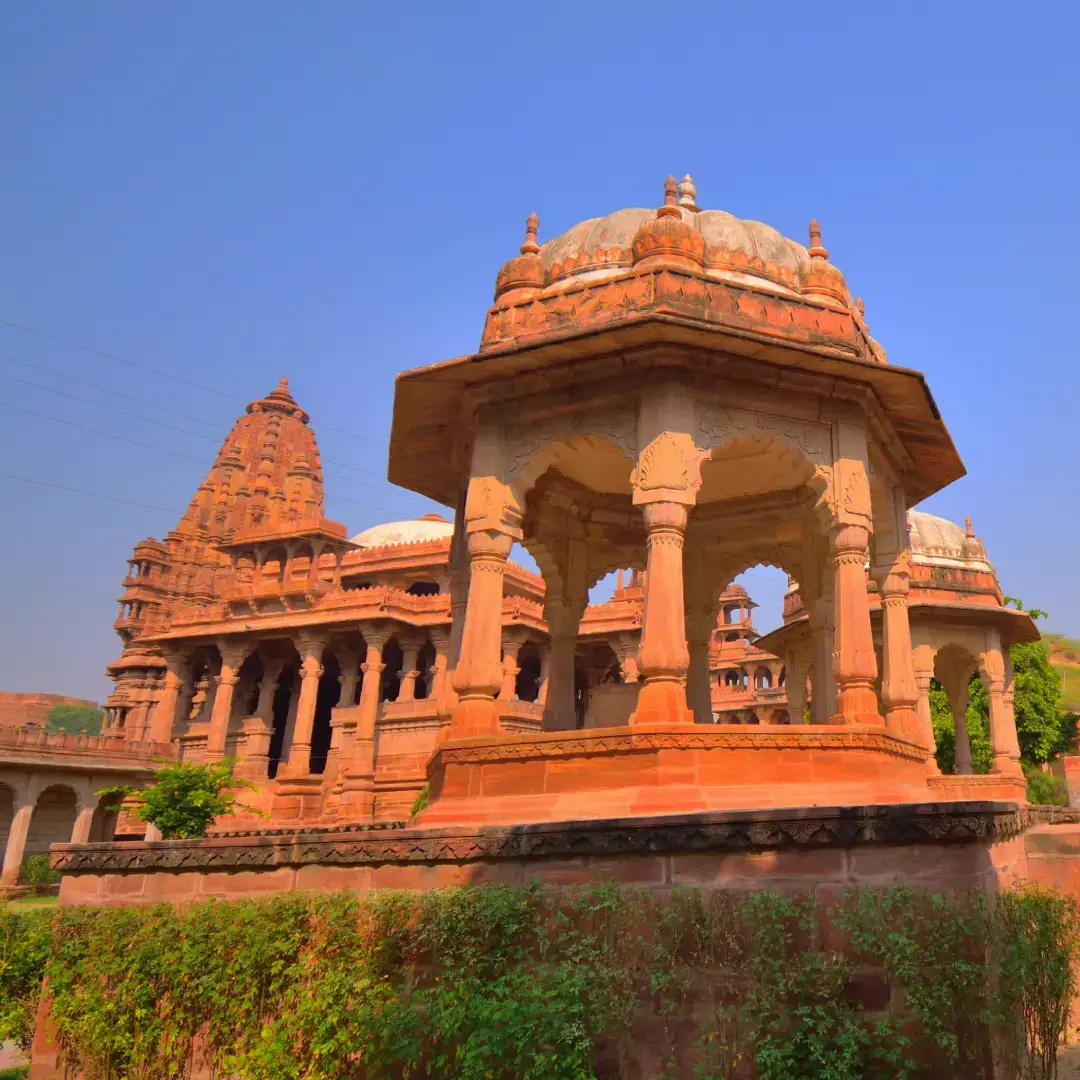
- Jaswant Thada
- Toorji Ka Jhalra Bavdi (Stepwell)
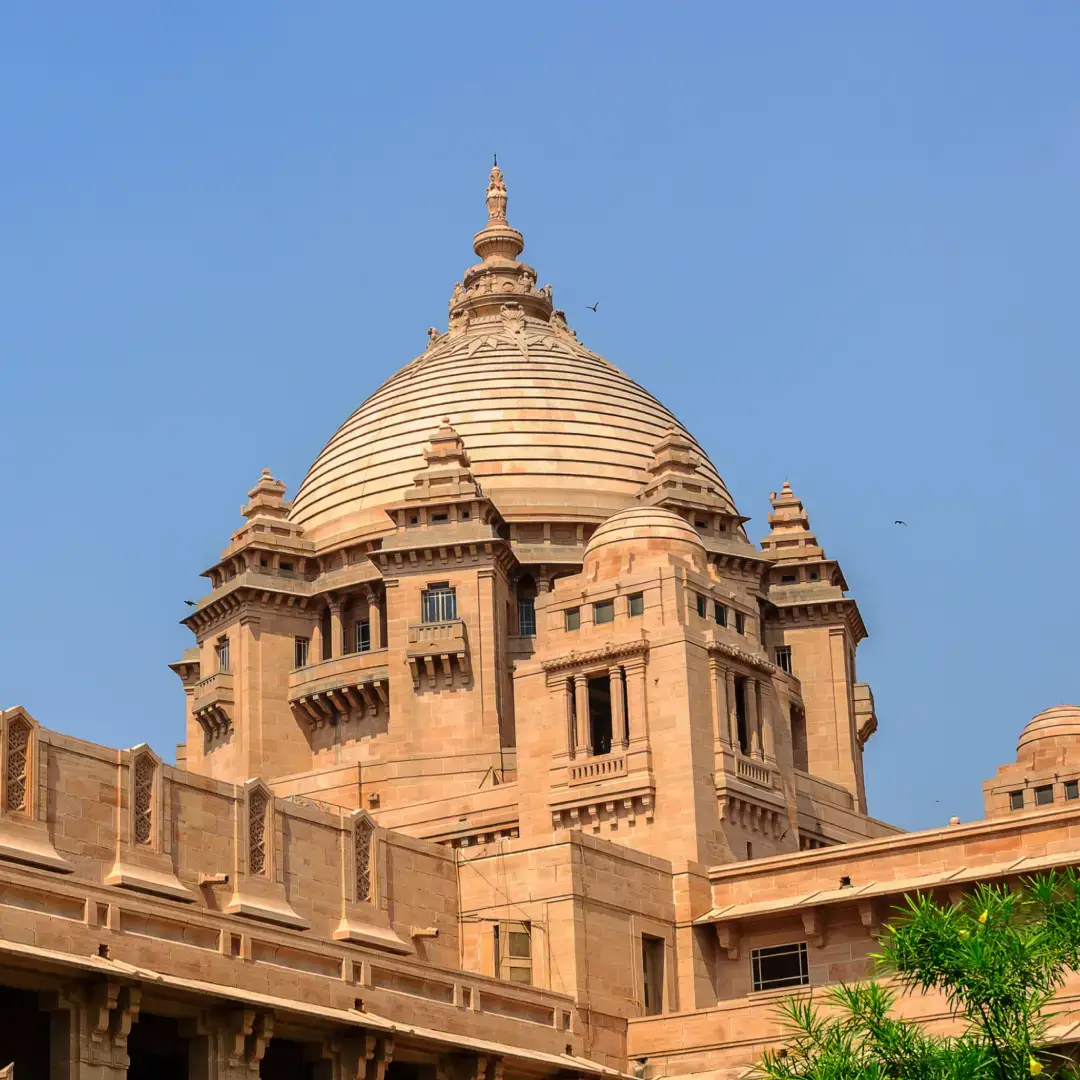
- Umaid Bhawan Palace
- Ghanta Ghar (Clock Tower) & Sardar Market
- Mandore Gardens
- Rao Jodha Desert Rock Park
Other Information
Opening Hours: Daily: 9:00 AM - 5:00 PM
ENTRY FEE
- Indian Adults: INR 100 per person
- Indian Senior Citizens/Students (with valid ID): INR 50 per person
- Foreigners (includes audio guide): INR 600 per person
- Photography Permit (Still Camera): INR 100
- Photography Permit (Video Camera): INR 200
- Elevator (One Way): INR 50 (from the base to the fort entrance)
- Audio Guide (if not included in ticket): INR 180
Note: Entry to Mehrangarh Fort is typically free for all guests on Jodhpur Foundation Day (May 12th), with only charges for the audio guide and elevator applicable. All fees are subject to change and may vary seasonally; it is advisable to verify the exact current rates at the ticket counter upon arrival
Address- Mehrangarh Fort, The Fort, Sodagaran Mohalla, Jodhpur, Rajasthan - 342006, India.
 Rajasthan Tourism