History of Junagarh Fort
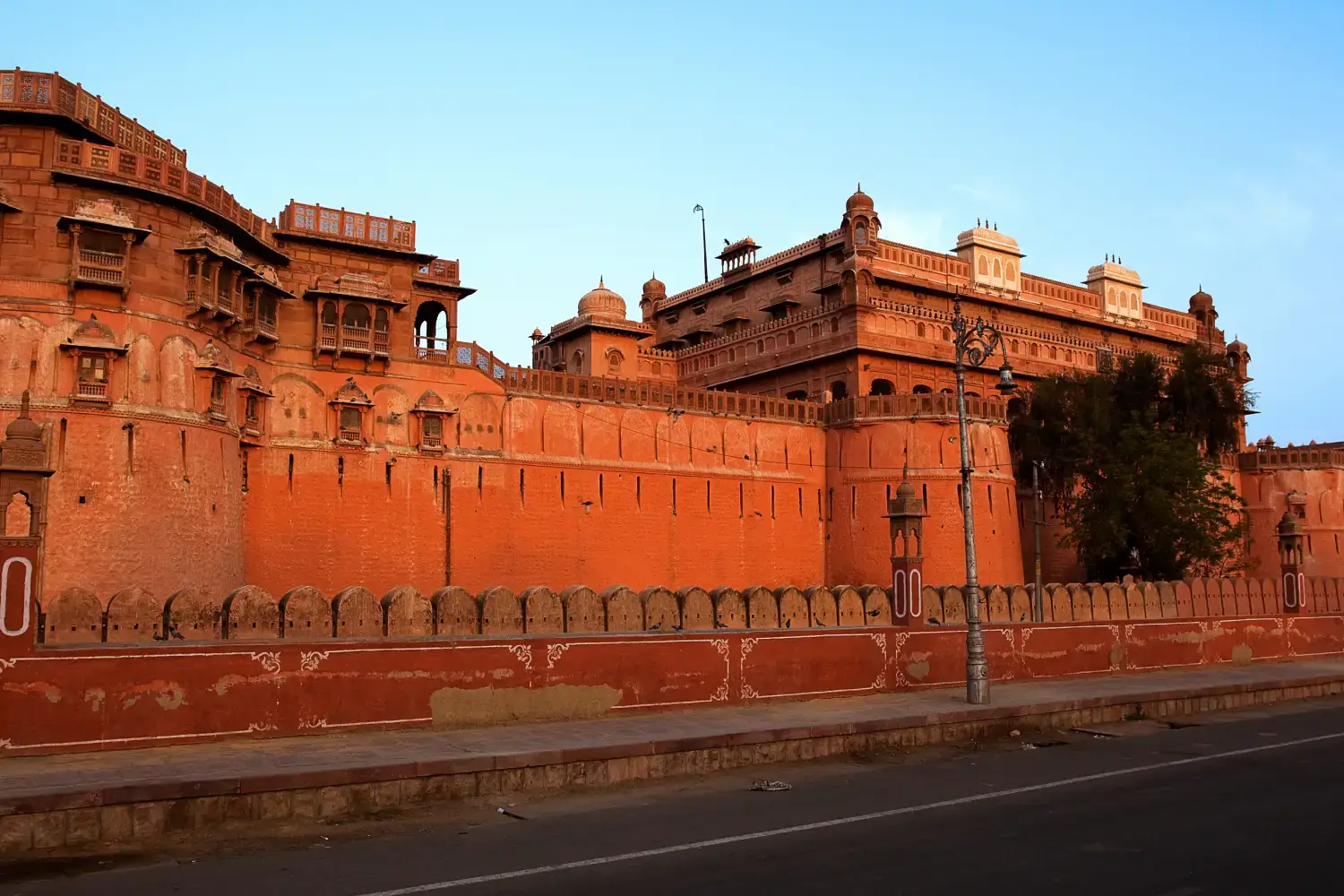
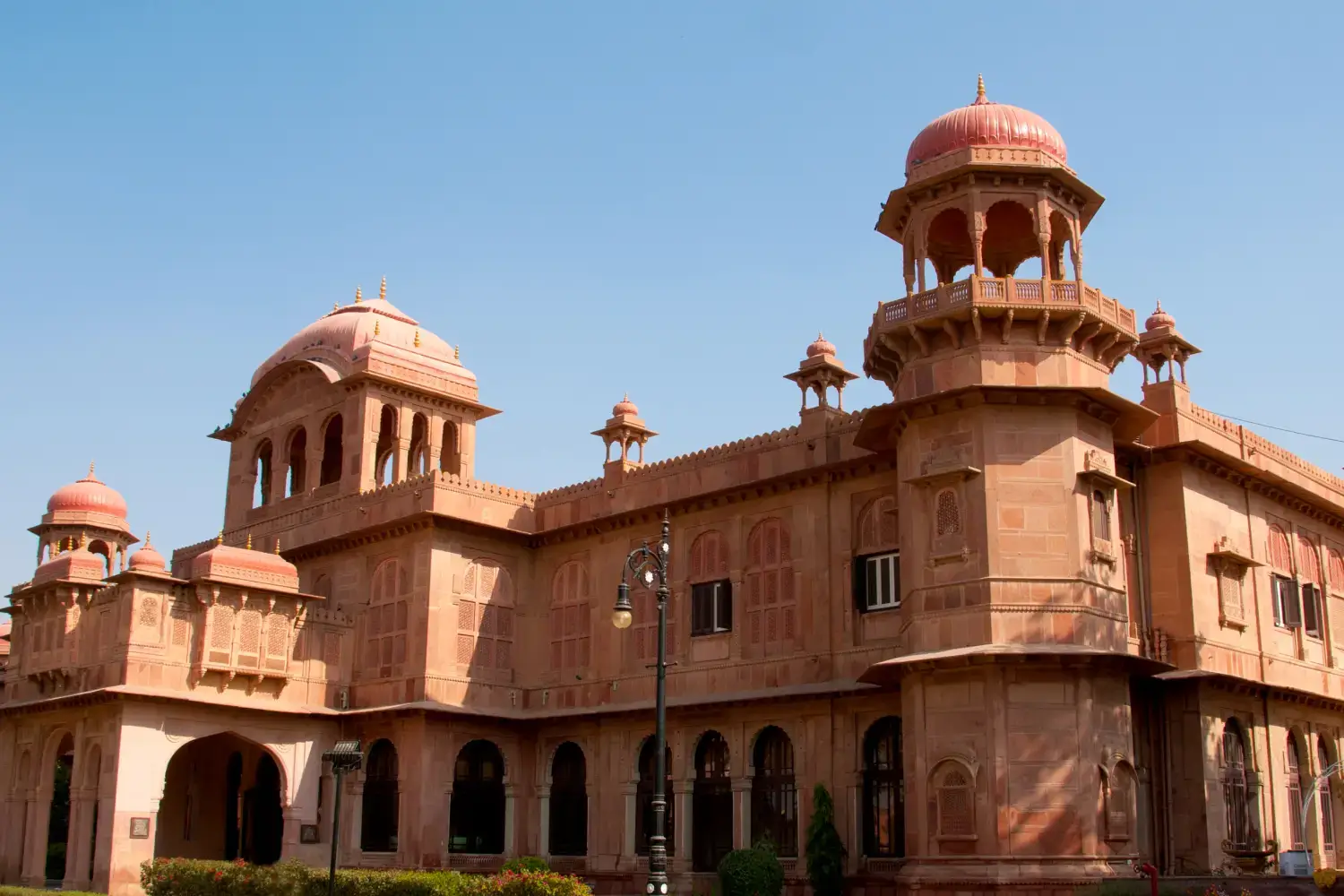
The history of Bikaner’s Junagarh Fort dates back to 1478 when Rao Bika laid the foundations of the city. But it was in the time of Raja Rai Singh, the sixth ruler of the city and a trusted general in Emperor Akbar’s court, who built the fort between 1588 and 1593. Originally named Chintamani Fort, it was later called Junagarh, which means "Old Fort," after the royal family moved to the new Lalgarh Palace. The fort has witnessed the rule of many kings who expanded and added palaces, temples, and courtyards. Despite numerous invasions, Junagarh was never captured, symbolizing Bikaner’s strength and strategic defense skills. Its well-preserved history makes it one of the most interesting places to visit in Bikaner.
Architecture and Design of Junagarh Fort
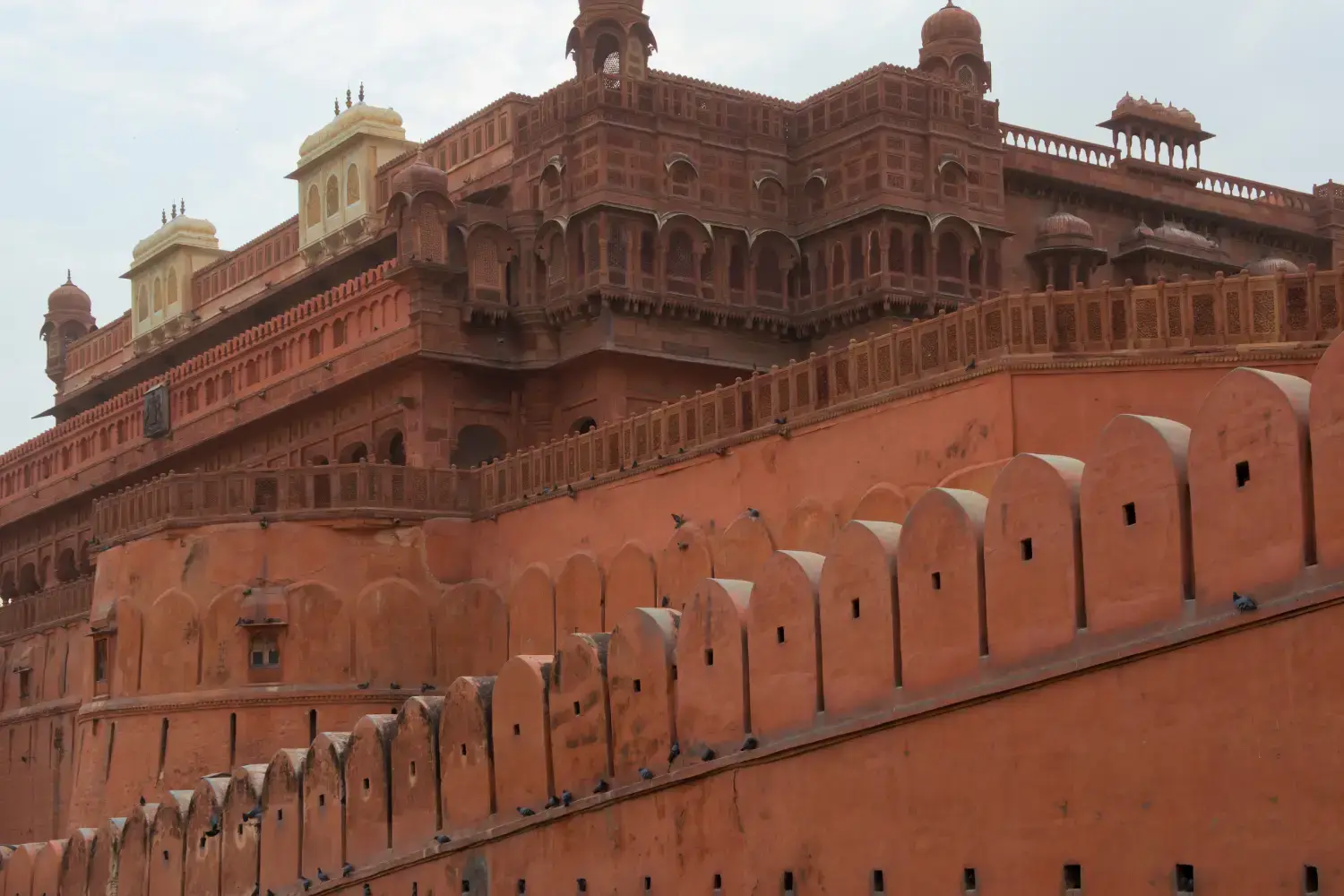
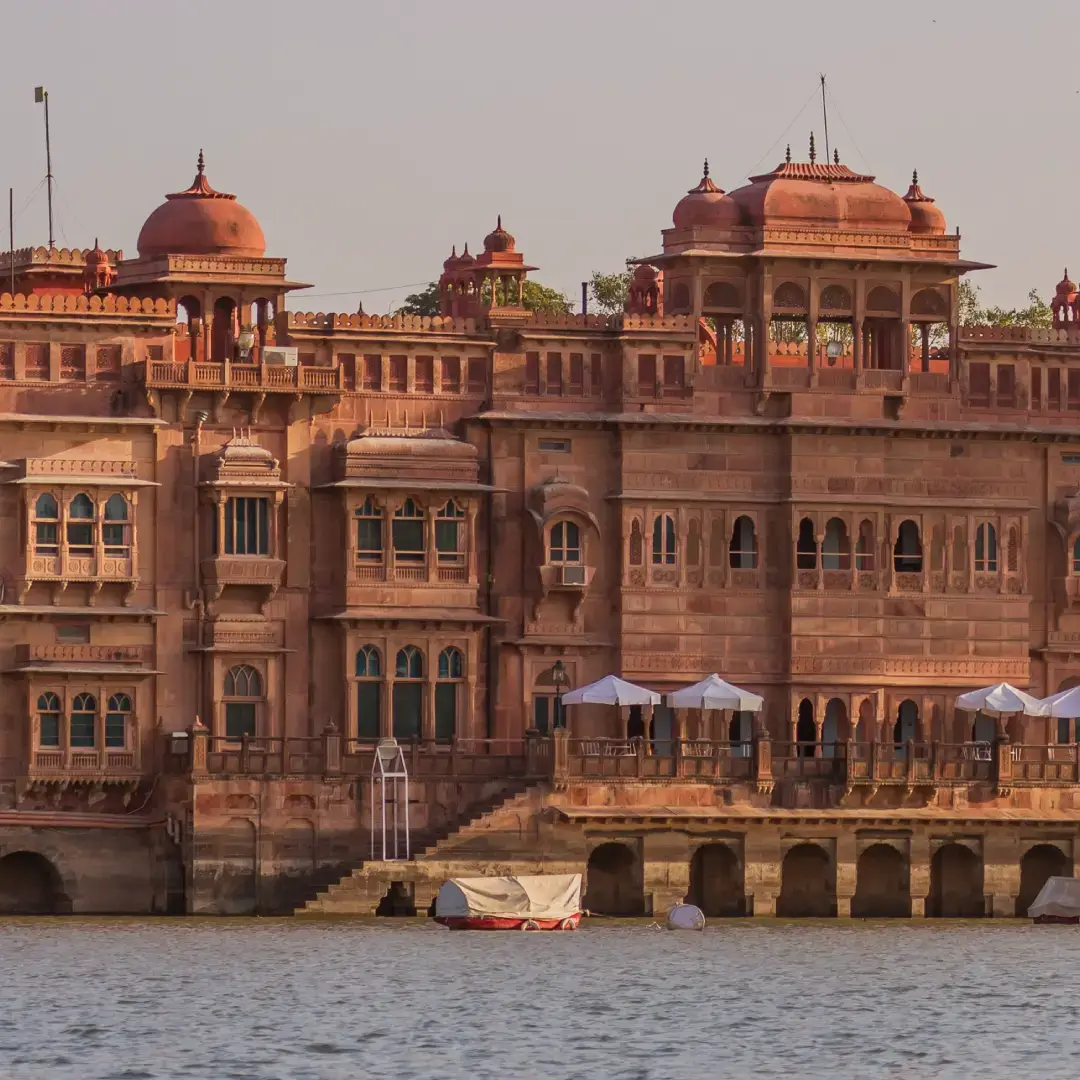
Junagarh Fort is a stunning example of Indo-Mughal architecture. It is one of the most architecturally rich places to see in Bikaner. The fort's design shows an impressive mix of Rajput, Mughal, and Gujarati influences. With its imposing rectangular layout spanning over 1,078 yards and enclosing an area of 63,119 square yards, the fort's grandeur is undeniable. Its sandstone walls, adorned with intricate carvings in hues of red and gold, stand as a testament to the artistry of its creators. You can see this in its intricately carved balconies, grand courtyards, lattice windows, and marble interiors. Fortified bastions, and large gates including Suraj Pol and Karan Pol, highlight the strength of Bikaner’s defense system.
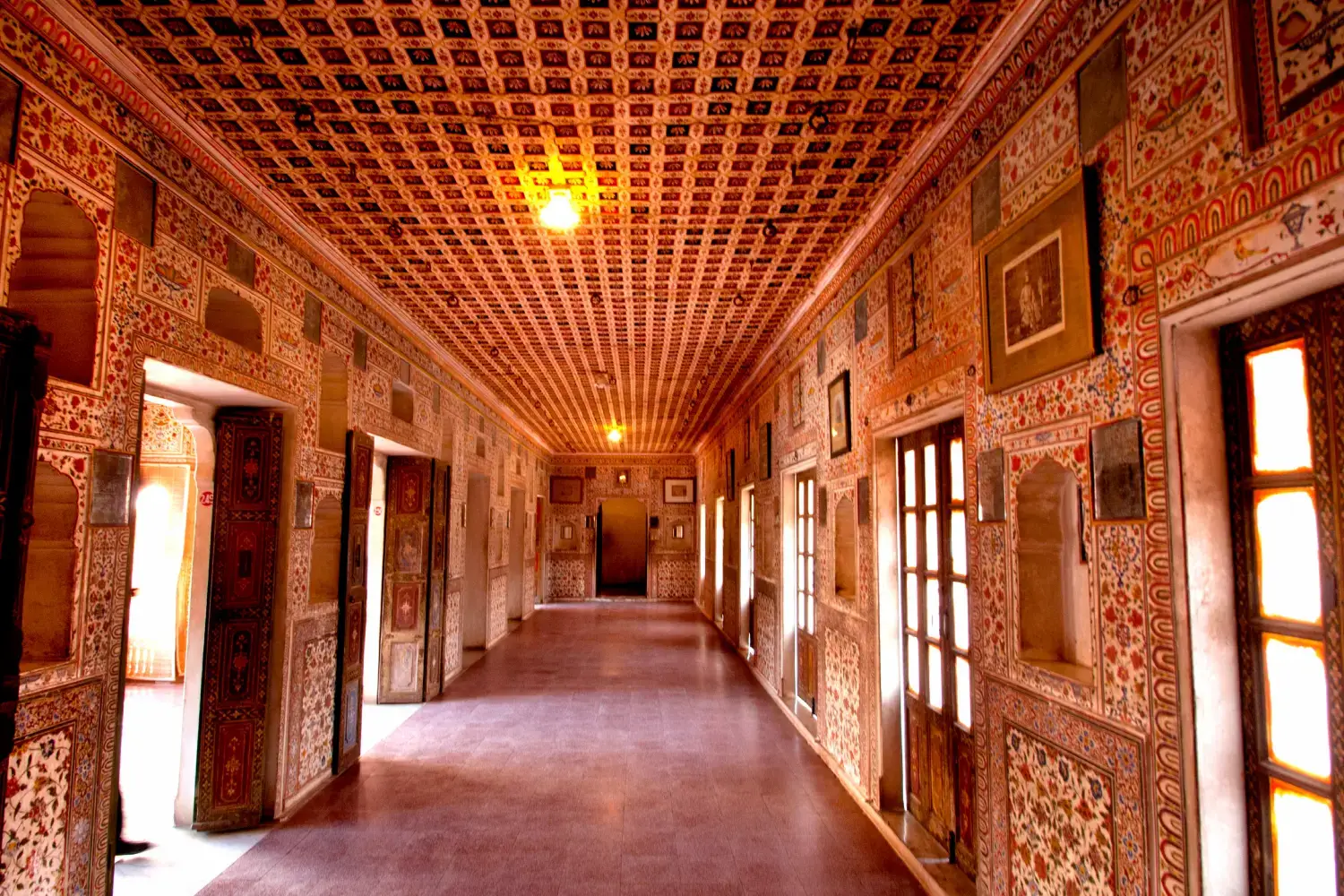
Inside the fort, visitors can explore beautifully designed palaces like Anup Mahal, Karan Mahal, Phool Mahal, and Chandra Mahal. Each palace showcases exquisite frescoes, gold leaf work, and mirror-studded ceilings. Temples, pavilions, and balconies add to the visual richness of the structure. As one of the top attractions in Bikaner, Junagarh Fort's layout combines strategic brilliance with artistic beauty. The fort's elaborate design draws architecture enthusiasts and historians, making it a must-see for anyone exploring Bikaner or planning to visit for cultural experiences.
Gates of Junagarh Fort
Junagarh Fort has seven fortified gates. Each gate was designed for defense and royal ceremonies.
- Karan Pol is the main entrance to the fort. It provides access to the inner courtyards and palaces.
- Suraj Pol symbolizes the rising sun. This gate faces east and was used for early morning processions.
- Daulat Pol marks the site of royal sacrifices and has the memorial handprints of queens who committed sati.
- Other gates, like Chand Pol and Fateh Pol, added extra layers of protection. They show the military planning typical of Bikaner tourist spots.
These entrances are fitted with iron spikes and large wooden doors. They reflect the fort's defensive strength.
Palaces of Junagarh Fort
Each palace inside the fort represents a different era and architectural style. This makes the complex a museum of changing royal tastes.
Built by Karan Singh in the 17th century to celebrate military victories, this palace served as a public audience hall. It features decorative stained-glass windows, intricate floral patterns, and beautifully carved wooden ceilings.
Anup Mahal is one of the most lavish structures in the fort. It served as the royal court and administrative center. Its interiors boast gold leaf decorations, Italian tiles, elaborate mirror work, and wooden lattice panels. This makes it a highlight among top attractions in Bikaner.
Phool Mahal is the oldest palace in the fort, built by Raja Rai Singh. Known as the "Flower Palace," it is adorned with floral frescoes and Mughal-Rajput ornamental designs. It offers insight into early royal aesthetics.
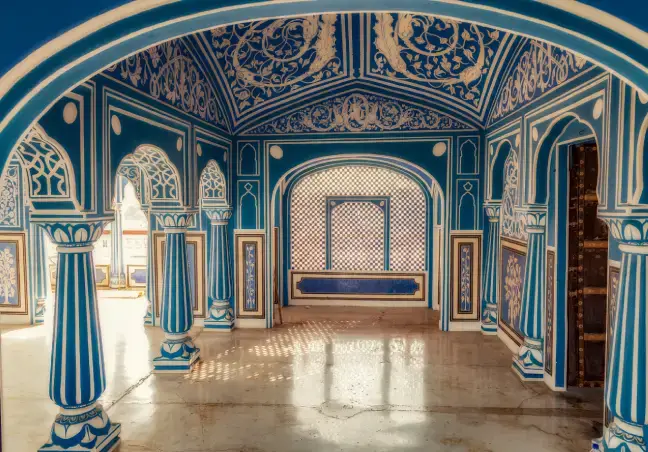
Badal Mahal is designed to reflect the theme of rain and clouds. The palace has blue-painted walls with cloud motifs. It was created to provide psychological relief from the dry desert climate of Bikaner.
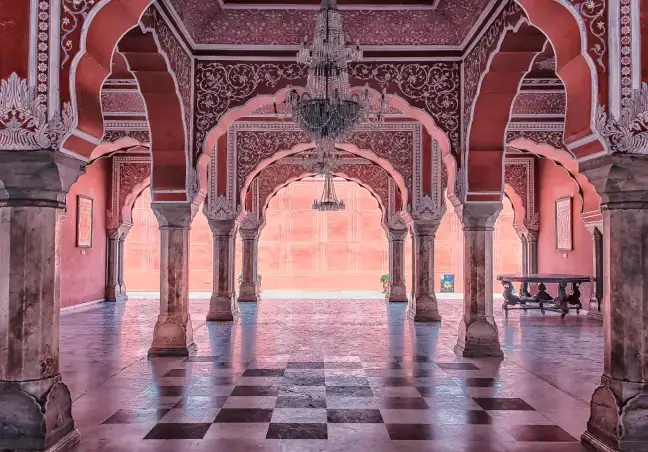
Chandra Mahal is a private chamber for the royal family. This "Moon Palace" features mirror-studded ceilings, white marble floors, and ornate walls. The palace has a dreamy, intimate atmosphere that showcases royal lifestyle.
Ganga Mahal was built by Maharaja Ganga Singh. It has a more colonial style and now houses a museum. The palace was used for state meetings and formal gatherings. Its design includes high ceilings, symmetrical layouts, and European elements.
- Bikaneri Havelis (Residences) :
These were smaller quarters within the fort complex, used by royal women and attendants. They include intricately carved jharokhas (balconies) and jaali windows for privacy, typical of Rajput architecture in Bikaner tourist places.
Gardens and Courtyards
The fort features several open courtyards and garden spaces. These were designed to provide light, ventilation, and space for events. These areas softened the fort’s otherwise defensive design, giving it a more palace-like atmosphere.
Temples Inside the Fort
Religious devotion was a central part of the royal family’s life, seen in the temples inside Junagarh Fort.
- Har Mandir : It is the private royal temple where rulers celebrate festivals like Dussera and Diwali. They also performed important family rituals there.
- Ratan Behari Temple : This temple is dedicated to Lord Vishnu. It showcases Indo-Mughal architecture with its marble carvings and domes.
These temples play a key role in Bikaner's spiritual and architectural tourism.
Junagarh Fort Museum
The Fort Museum, located inside Ganga Mahal within Junagarh Fort, is a must-visit spot in Bikaner for history lovers. Established by Maharaja Dr. Karni Singh, the museum features a rich collection of artifacts that showcase Bikaner's royal history, cultural depth, and military bravery.
Museum Highlights
The museum has several galleries displaying:
- Royal Costumes and Ornaments : Beautifully embroidered clothes worn by Bikaner’s rulers and queens, including turbans, robes, and jewelry.
- Weapons and Armoury : A striking collection of swords, daggers, firearms, shields, and even artillery mounted on camels, demonstrating Bikaner’s military power.
- Manuscripts and Documents : Rare Sanskrit texts, farmans (royal decrees), and administrative records that provide a glimpse into governance.
- Thrones and Royal Furnishings : Silver chairs, wooden palanquins, and beautifully decorated furniture from various reigns.
Fairs and Festivals
Though Junagarh Fort does not hold large public fairs, it plays a key cultural role in the fairs and festivals of Bikaner. As the historical seat of Bikaner’s royalty, the fort has served as a ceremonial center for royal festivities, religious events, and seasonal celebrations.
- Dussehra and Diwali at Har Mandir :
The Har Mandir, located inside the fort, hosted elaborate royal ceremonies during festivals like Dussehra and Diwali. The Maharajas performed special pujas here, followed by processions and gatherings in the courtyards. These events highlighted the strong link between the monarchy and religious life. Although not historically open to the public, today they are part of Bikaner's cultural memory.
The Bikaner Camel Festival takes place at the Karni Singh Stadium, but Junagarh Fort often serves as a symbolic backdrop for inaugurations and photography. The fort's impressive facade appears in parades, cultural performances, and processions that pass by, especially on the festival's opening day in January.
- Foundation Day and Local Cultural Events :
Sometimes, the fort becomes a venue for heritage walks, art exhibitions, and cultural shows organized by the Bikaner Tourism Department. On Bikaner Foundation Day, flag hoisting and traditional performances occur near the fort, attracting locals and tourists to experience Bikaner’s festive spirit.
Interesting Facts About Junagarh Fort:
- Junagarh Fort is one of the few forts in Rajasthan that was never taken in battle, despite several attempts by strong enemies.
- The fort stands out because it was built on flat land instead of a hill, which makes its design even more impressive among Bikaner tourist places.
- It features a World War I-era biplane, given to Maharaja Ganga Singh by the British, now on display in the fort museum.
- Badal Mahal inside the fort is decorated with images of clouds and lightning to create the feeling of a cooler, rainy atmosphere in the desert.
- The fort showcases a mix of Rajput, Mughal, Gujarati, and European architecture, reflecting the cultural openness of Bikaner’s rulers.
- The fort complex also includes memorials with handprints of royal women who committed sati, adding emotional and historical significance.
Additional Details :
- Opening Hours : 10:00 AM – 4:30 PM
- Museum timings : 9:00 AM to 6:00 PM
- Remains : Closed on Sundays
- Entry Fee : ₹50* (Indian Citizens), ₹300* (Foreign Tourists)
- Museum Ticket (for Indians) : ₹20*
- Museum Ticket (for foreigners) : ₹100*
Note : Entry fee and Museum ticket prices may vary.
Address : Junagarh Fort Road, Bikaner, Rajasthan 334001, India
 Rajasthan Tourism