History of Lalgarh Palace and Museum
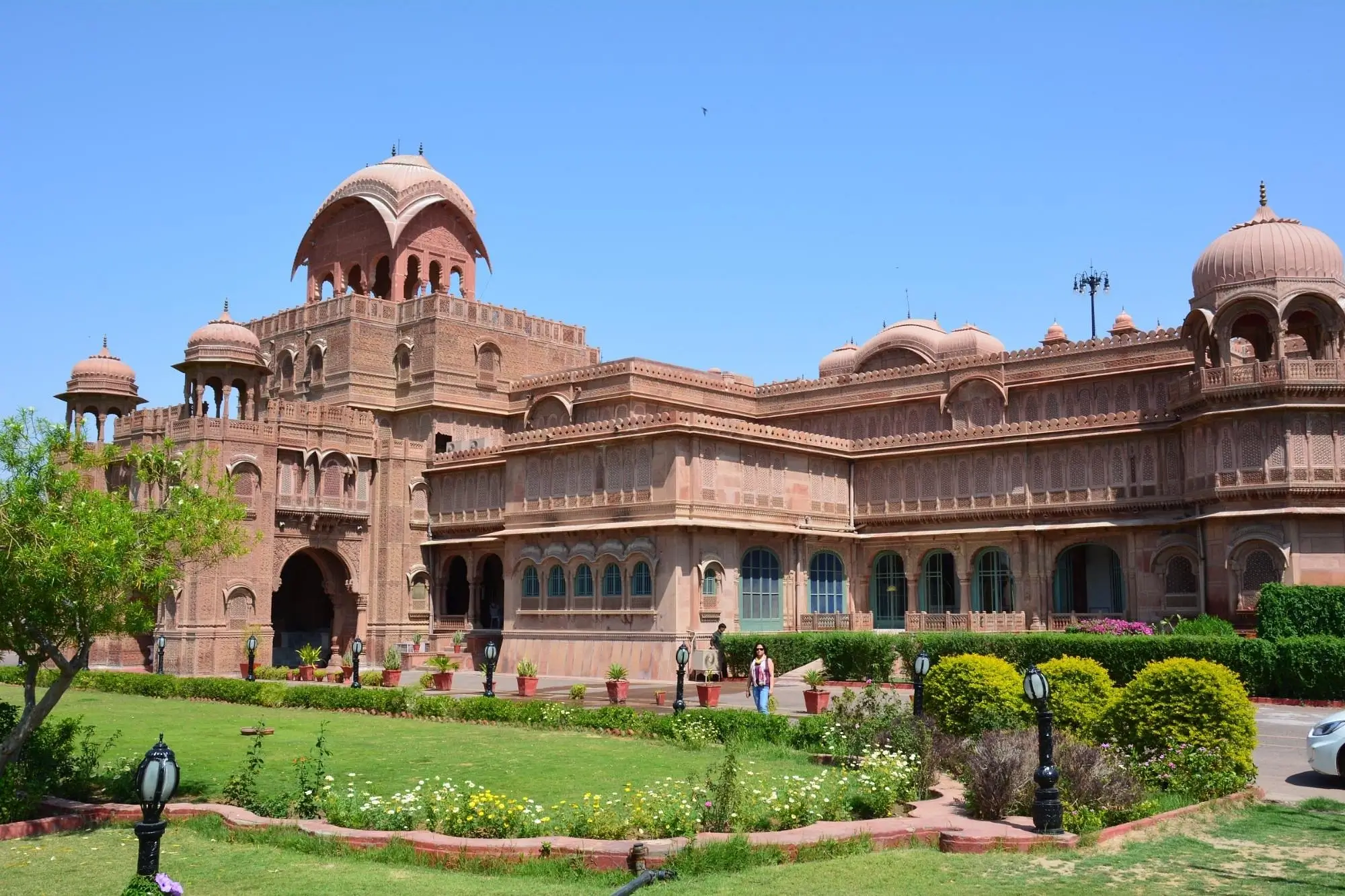
Lalgarh Palace, one of the top Bikaner tourist places, was built between 1902 and 1926 by Maharaja Ganga Singh. He constructed the palace in honor of his father, Maharaja Lall Singh, which is why it is called "Lalgarh." The work continued until 1926 and aimed to modernize Bikaner and establish it as a princely state with better infrastructure.
Sir Samuel Swinton Jacob, a British architect, designed the palace in the Indo-Saracenic style, blending Rajput, Mughal, and European architecture. The structure served as the royal home for the Bikaner rulers and represented their growing status during British rule. Over the years, it became a hub for royal events, state matters, and cultural activities.
The palace has welcomed several distinguished guests over the years, beginning with Lord Curzon, its first notable visitor. Among the many esteemed guests were Queen Mary, King George V, Lord Hardinge, Lord Irwin, and former French Prime Minister Georges Clemenceau, who visited in 1920.
Today, part of the palace still serves as the royal residence, while the rest is now a heritage hotel and a museum. This makes it a key part of Bikaner tourism.
Architecture and Design of Lalgarh Palace and Museum
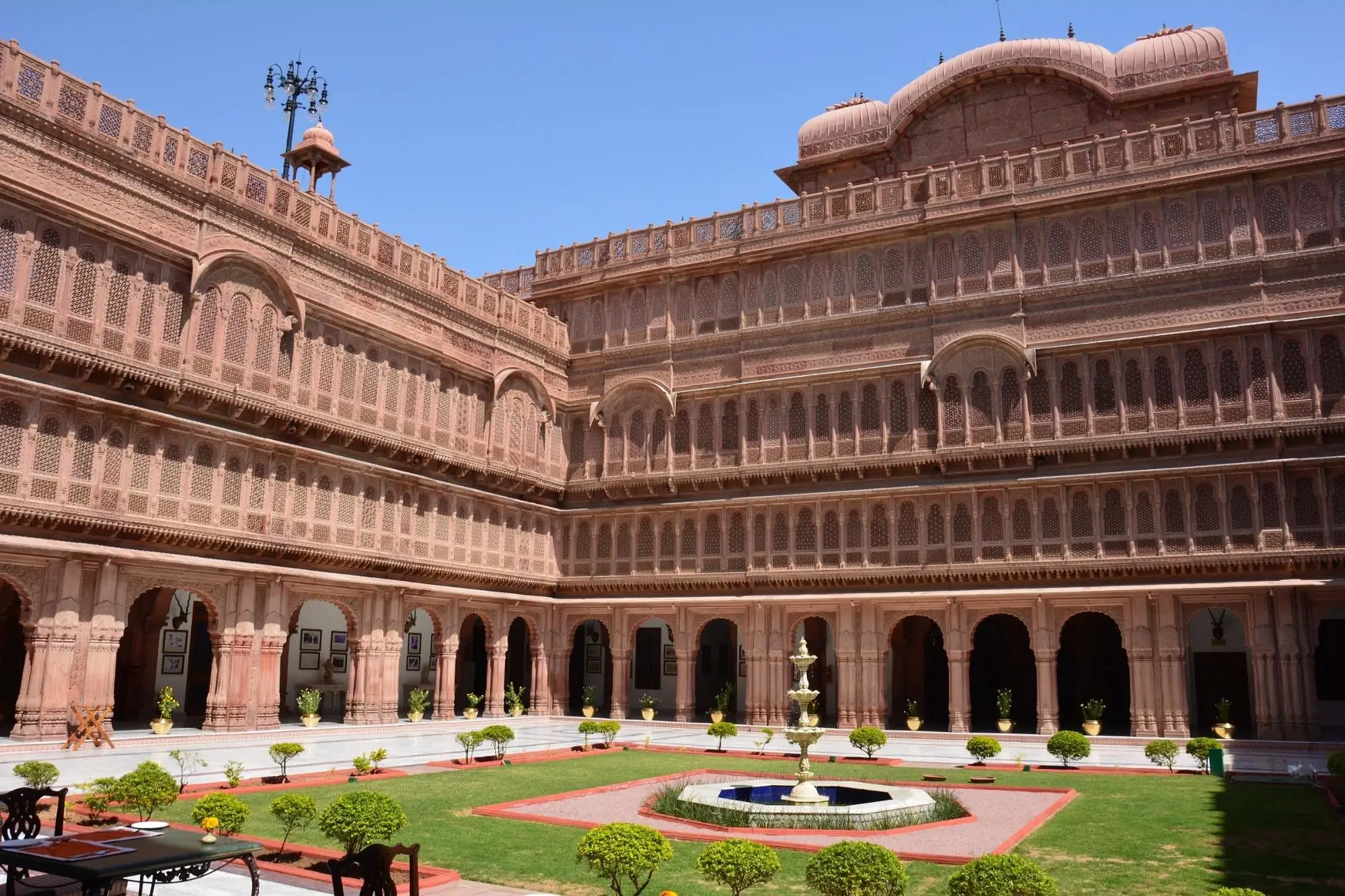
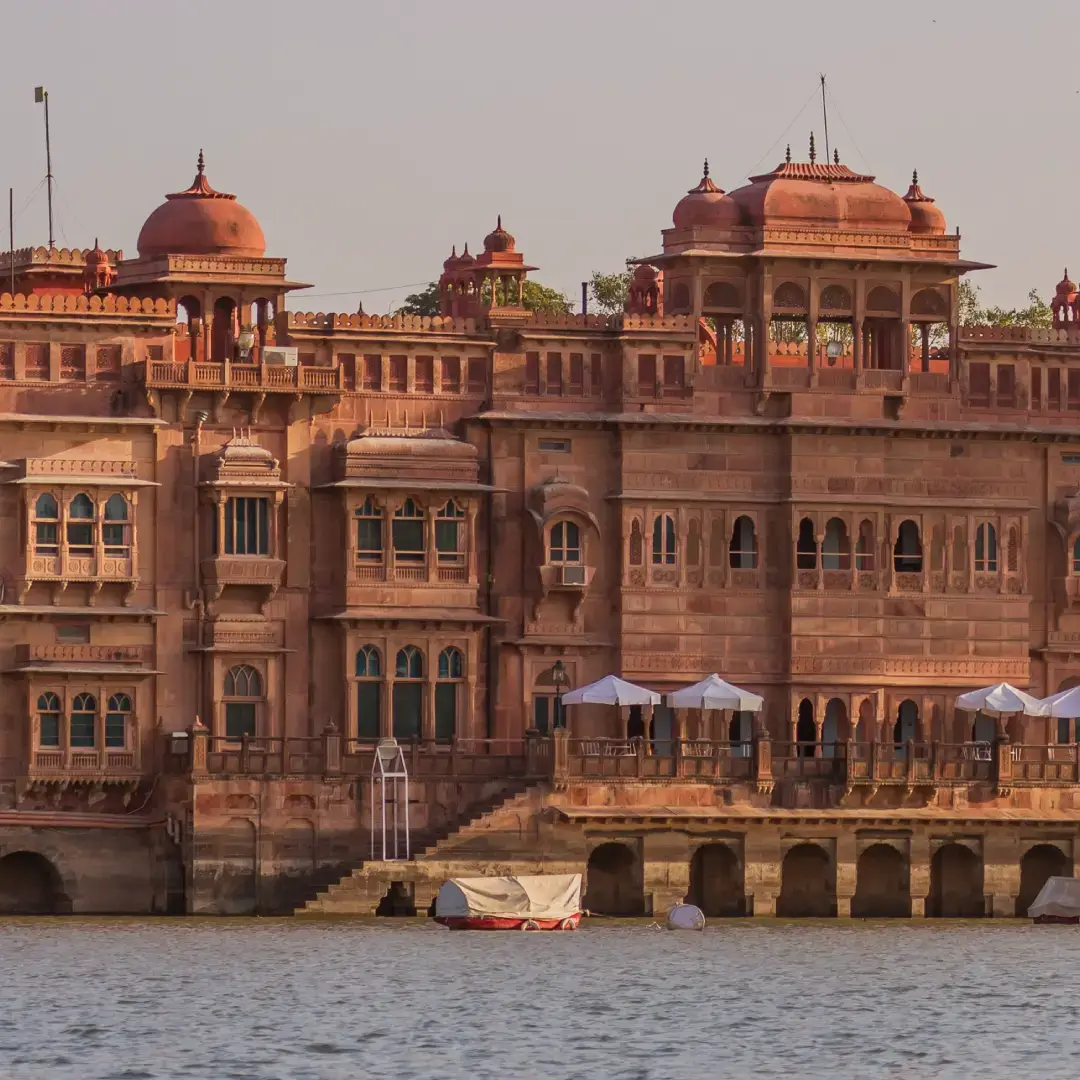
Lalgarh Palace stands as a stunning example of Indo-Saracenic architecture, seamlessly blending Rajput, Mughal, and European design elements. Constructed from the rich red sandstone of the Thar Desert, it is among the most remarkable attractions in Bikaner. Designed by British architect Sir Samuel Swinton Jacob, the palace comprises four wings, including the prominent Laxmi Niwas and Karni Niwas.
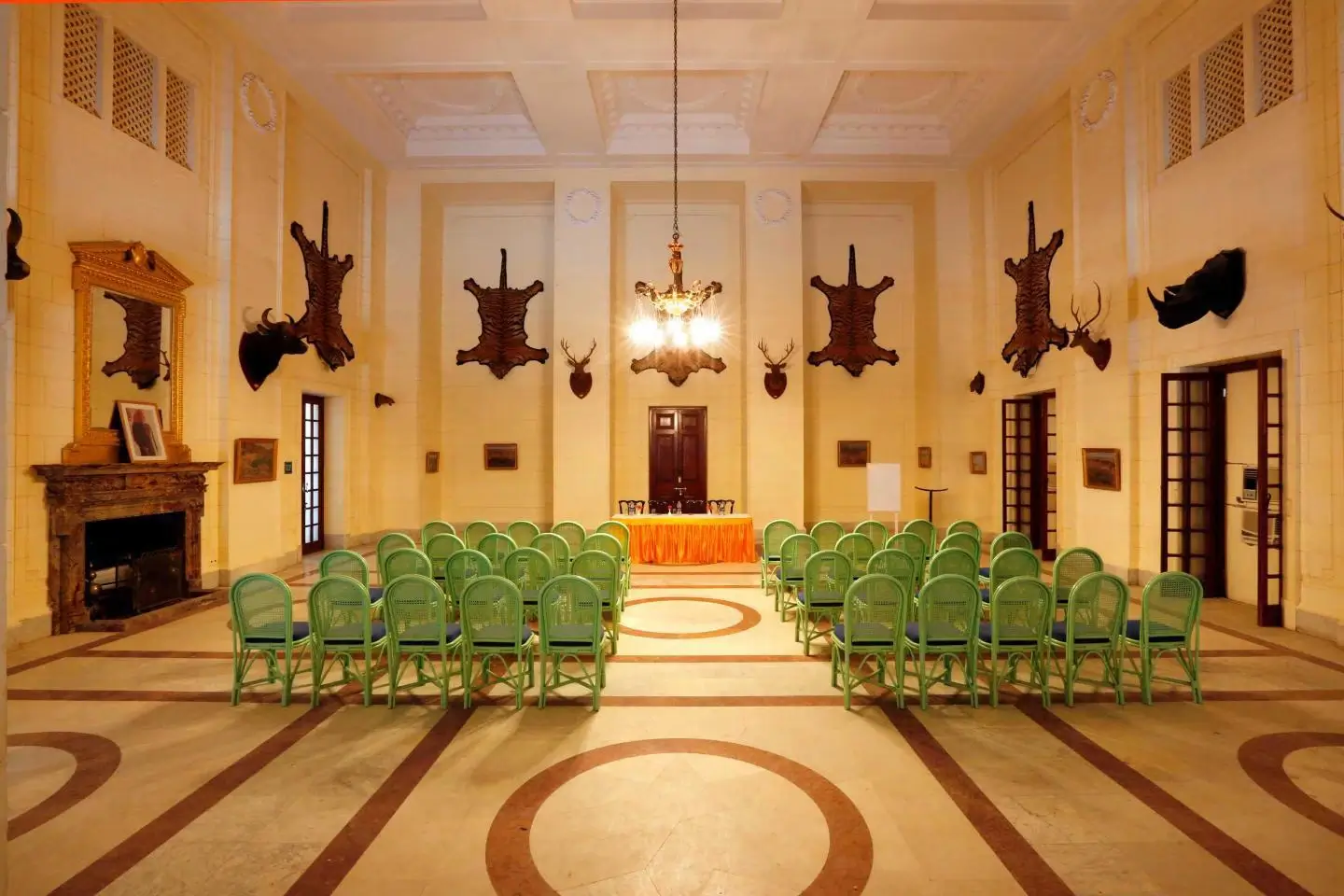
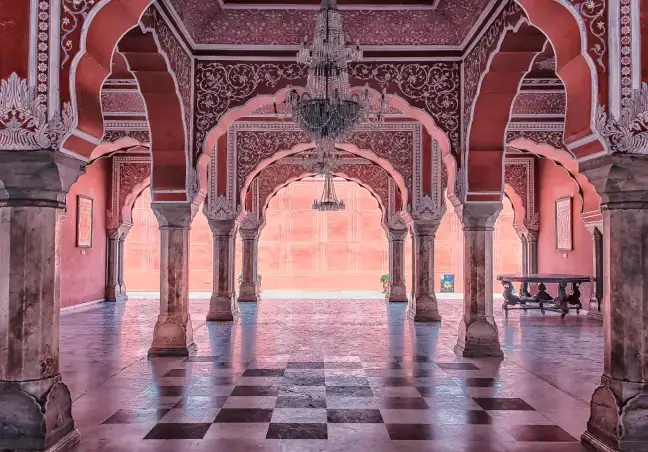
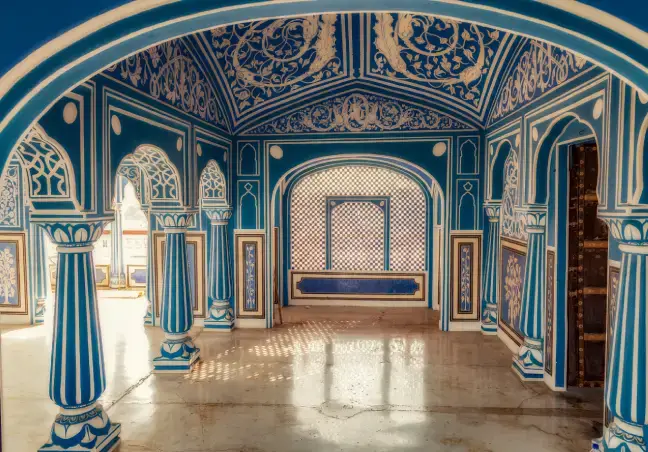
The palace complex was built to reflect the grandeur of a late 19th-century royal residence, complete with elegant drawing rooms, smoking chambers, lavish guest suites, and a series of opulent halls and lounges. Striking architectural features include grand pillars, ornate fireplaces, Italian-style colonnades, and exquisite lattice and filigree work. The Karni Niwas wing is home to the regal darbar hall and a beautifully designed indoor swimming pool in the Art Deco style. Notably, the palace also houses a grand dining hall that could accommodate up to 400 guests.
Lalgarh Palace Museum (Shri Sadul Museum)
Housed in a wing of the grand Lalgarh Palace, the Shri Sadul Singh Museum offers a captivating look into Bikaner’s royal past. It was established to honor Maharaja Sadul Singh and features personal artifacts, historical records, and royal memorabilia from the reigns of three kings: Maharaja Ganga Singh, Maharaja Sadul Singh, and Maharaja Karni Singh. It’s a key highlight among places to visit in Bikaner for history lovers.
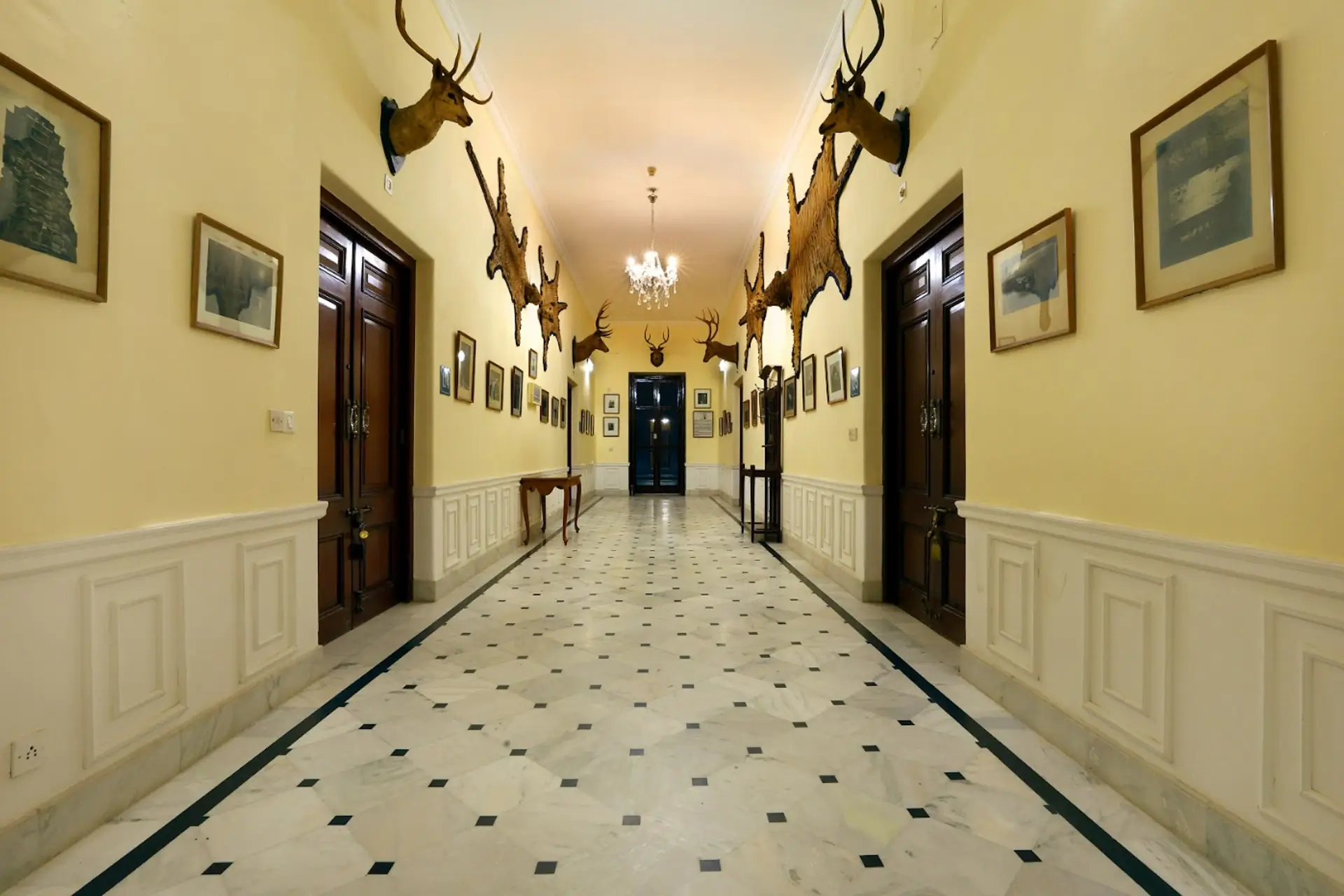
The exhibits include royal costumes, intricately carved weapons, silverware, vintage photographs, miniature paintings, and handwritten letters, some of which were exchanged with British Viceroys and dignitaries. The museum also displays hunting trophies and portraits that highlight the luxurious lifestyle of the royals.
Photography & Film Importance
Lalgarh Palace is well-known as a royal location for photographers, filmmakers, and wedding planners. Its mix of Rajput, Mughal, and European architecture provides an elegant and grand setting, perfect for capturing beautiful images. The arched corridors, detailed latticework, and large gardens create a great backdrop for heritage and fashion photography.
The palace gained fame when parts of the popular Bollywood film Band Baaja Baaraat were filmed there, especially during the lively wedding scenes. Additionally, the nearby Laxmi Niwas Palace, part of the same complex, appeared in another Bollywood film Khoobsurat.
Today, Lalgarh Palace is one of the top attractions in Bikaner. It is often chosen for bridal shoots, cultural documentaries, and tourism campaigns.
Interesting Facts About Lalgarh Palace and Museum
- Lalgarh Palace was built without using a single nail, which highlights the skill of traditional craftsmanship.
- During the British Raj, the palace welcomed many dignitaries, including British officials and international guests.
- Now, part of the palace works as a heritage hotel run by the Royal family of Bikaner, letting visitors experience royal living.
- Its beautiful Indo-Saracenic architecture has made the palace a popular spot for documentaries and heritage films.
- The museum holds handwritten letters between the Maharajas of Bikaner and important figures from British India.
- The lush gardens around the palace were designed with Mughal landscaping ideas, which are rare in Rajasthan’s desert setting.
- The palace also serves as a partial home for Bikaner’s royal descendants, keeping its royal legacy alive.
Additional Details :
- Opening Hours : 10:00 AM – 5:00 PM (Closed on Sundays)
- Entry Fee : ₹10 (Indian tourists), ₹20 (Foreign tourists), Extra charges for photography
- Address : Lalgarh Campus, NH15, Samta Nagar, Bikaner, Rajasthan 334001, India