Legend and Mythology
Karni Mata, regarded as an embodiment of Shakti, chose a life of celibacy. To ensure her husband Depaji’s lineage continued, she arranged for her younger sister to marry him. The couple had four sons, the youngest being Lakshman, whom Karni Mata loved and raised as her own.
One day, Lakshman drowned while bathing in Kapil Sarovar near Kolayat. Devastated, Karni Mata’s sister begged her to bring him back. Karni Mata carried Lakshman’s body to the spot where the temple’s inner sanctum now stands, closed the doors, and instructed no one to enter. She then journeyed to Yama, the god of death, and demanded Lakshman’s life be restored. Yama questioned her, asking how the cycle of rebirth could function if such exceptions were made. In response, Karni Mata declared that her family would no longer be subject to Yama’s rule: “Wherever I reside, they shall reside. When they die, they will remain with me.”
To fulfill this, Karni Mata chose the form of the kābā (rat) as the vessel for rebirth. From then on, deceased members of the Charan community would be reborn as rats within her temple, and upon the death of the rats, they would return as human Charanas. This unique cycle of reincarnation preserves the Charan lineage across lifetimes, differing from the typical Hindu belief in transmigration where rebirth can cross jātis (castes or communities). Because of this, all her male descendants are thought to be reborn as kabas (rats), making the temple their eternal home.
Architecture and Layout
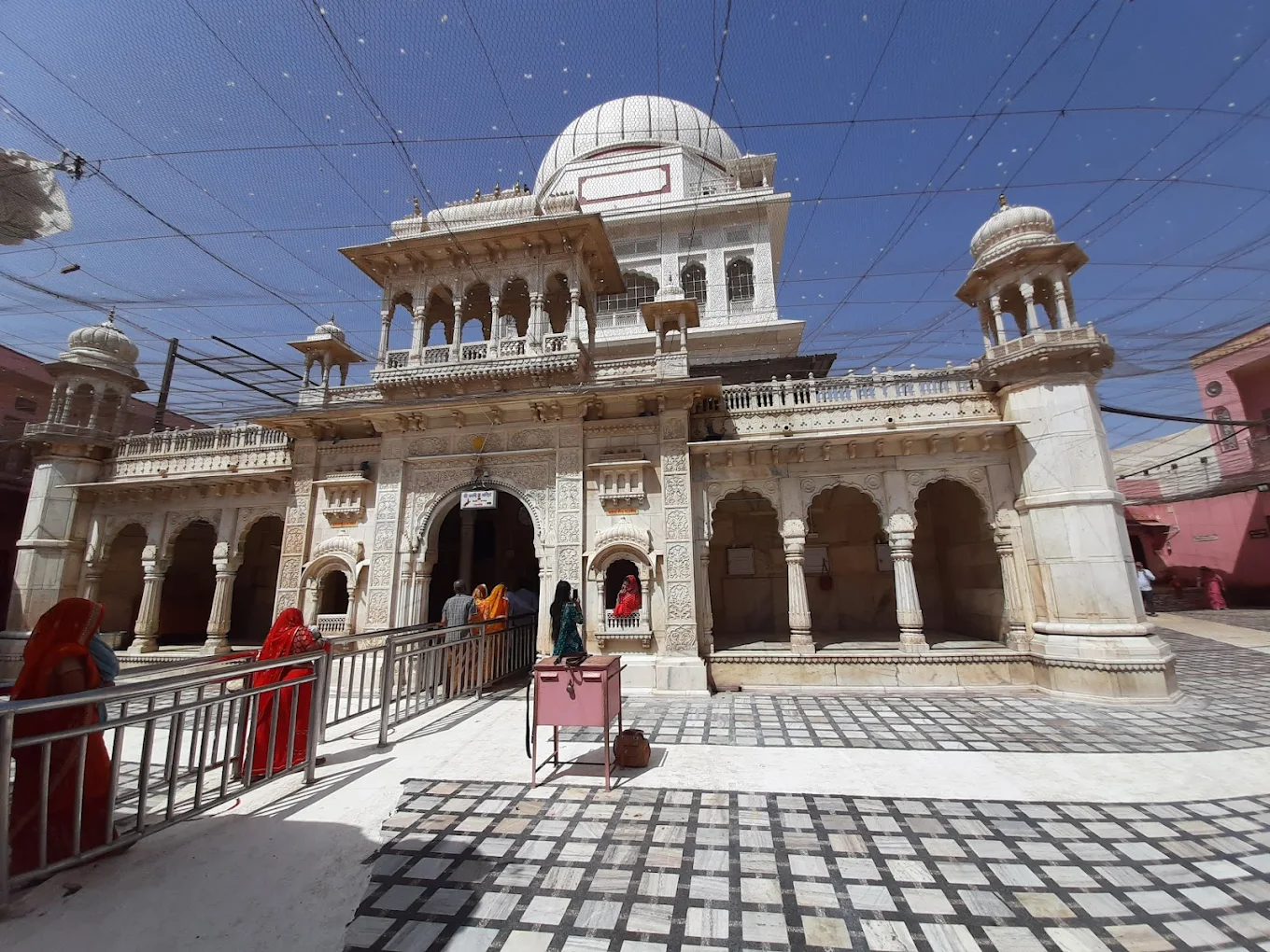
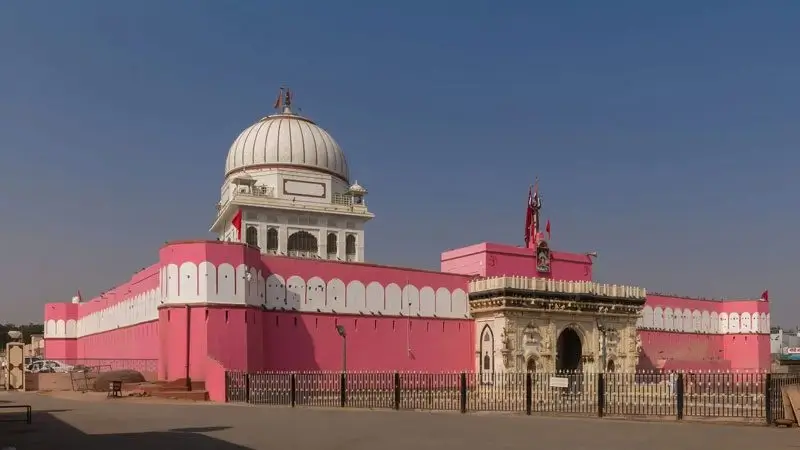
The Karni Mata Temple features a mix of Rajput and Mughal architectural styles. Its most impressive aspect is the grand marble façade, which has intricated floral carvings and beautiful jali (lattice) work. The main entrance displays silver doors covered in detailed engravings of Hindu deities and mythological scenes. These doors were donated by Maharaja Ganga Singh of Bikaner.
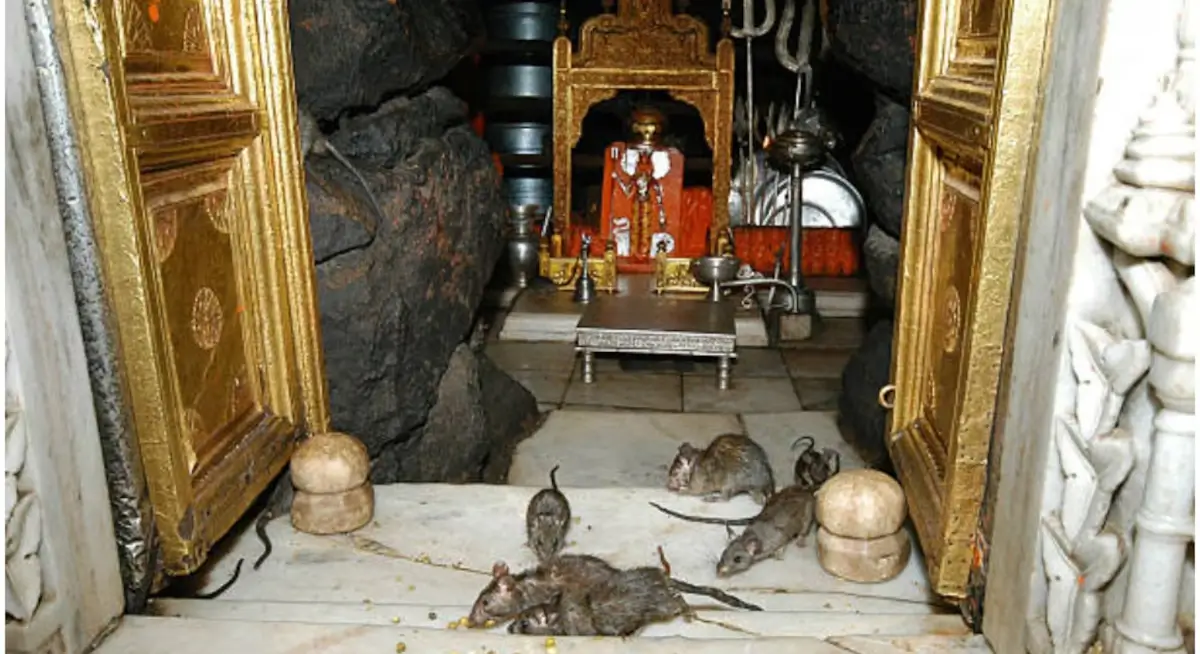
Inside the temple, the sanctum sanctorum houses an idol of Karni Mata. This idol is adorned with a crown and garlands and placed beneath an intricately sculpted canopy. The sanctum is surrounded by open courtyards that are usually filled with the temple’s most unique residents—thousands of rats that roam freely, feed, and rest.
The temple layout includes several pillared halls, arched corridors, and small shrines, which create a sacred atmosphere. Lamps, brass bells, and devotional flags enhance the spiritual feel of this must-visit place in Bikaner.
Religious Significance and Rituals
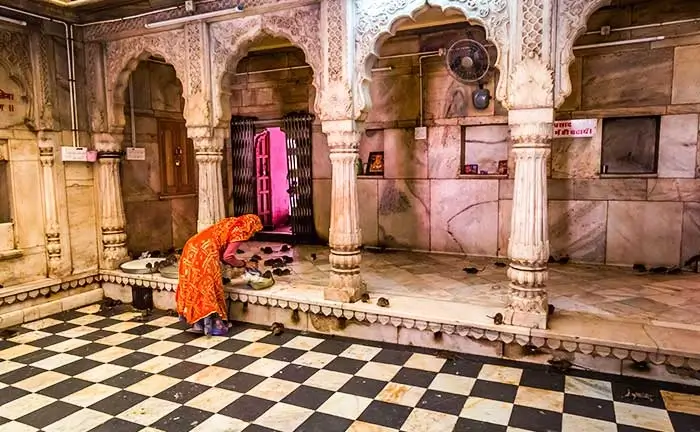
The Karni Mata Temple is more than just a religious site; it is a spiritual center for devotees, particularly the Charan community, who worship Karni Mata as their family deity, or kuldevi. Many devotees come to the temple to seek her blessings for protection, fertility, and prosperity. A unique part of the worship here is the reverence for rats, known as kabas. Offerings to rats include cheese and sweets and there are also bowls of milk around the temple for them to enjoy. Eating food that the rats have touched or nibbles is believed to be of “high honor”. Many worshipers also believe the rats' saliva has healing properties.
Unique Rat Population (Kabas)
One of the most striking features that makes Karni Mata Temple a unique travel destination in Bikaner is its sacred population of over 25,000 rats, called kabas. These rats are not only allowed inside the temple; they are worshipped. Harming or killing even one rat is seen as a sin. If a rat dies accidentally, the devotee must offer a silver or gold replica of the rat as penance. Spotting a white rat among the kabas is considered very lucky. It is believed to be a sign of Karni Mata or her sons. This remarkable bond between rats and humans is what makes this temple stand out. Devotees bring large trays of grains, sweets, and milk for the kabas to enjoy. Despite the high number of rats, the temple remains clean, and there have never been any reports of disease linked to them.
Festivals and Events
Karni Mata Temple is both a revered religious site and a lively place for spiritual celebrations, especially during the Navratri festival, which is the most important event here. This festival happens twice a year, Chaitra Navratri (March-April) and Ashwin Navratri (September-October). Each nine-day celebration draws thousands of pilgrims from Rajasthan and beyond. In addition to Navratri, Karni Mata’s Jayanti (birth anniversary) is also celebrated with great respect, making the temple one of the most spiritually vibrant places to visit in Bikaner.
During Navratri:
- Special aartis and bhajans honor Karni Mata.
- Devotees fast, join in night-long jagrans (devotional singing), and make ceremonial offerings.
- The temple is adorned with flowers, lights, and religious flags, creating a festive spiritual atmosphere.
- Many devotees walk from nearby towns and villages, expressing their devotion and faith.
Interesting Facts:
- The temple is home to over 25,000 rats, which are worshipped as sacred beings called kabas.
- Harming a rat here is a serious offense. A silver or gold rat must be donated as penance.
- Seeing a white rat is considered very lucky and a sign of divine blessing.
- Despite the large rat population, there has never been a reported case of plague or rat-borne disease from the temple.
Additional Details :
- Opening Hours : 4:00 AM – 10:00 PM
- Entry Fee : Free (Camera charges may apply)
- Address : Karni Mata Temple Road, Deshnok, Bikaner, Rajasthan 334801